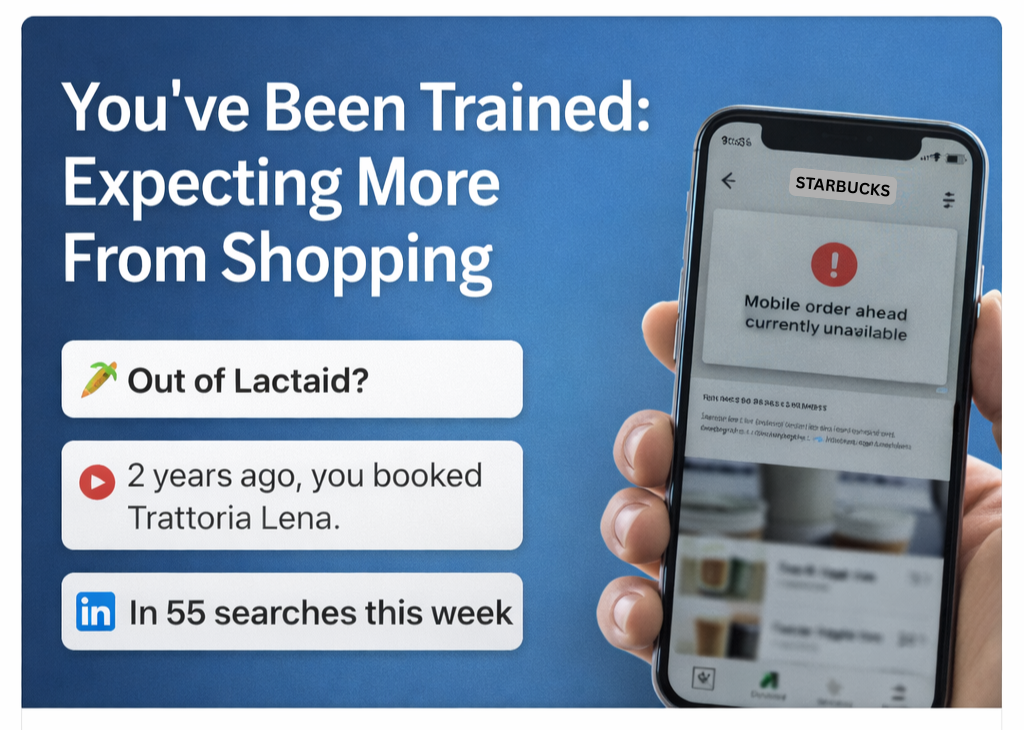
“You appeared in 55 searches this week.”
“2 years ago, you booked Trattoria Lena.”
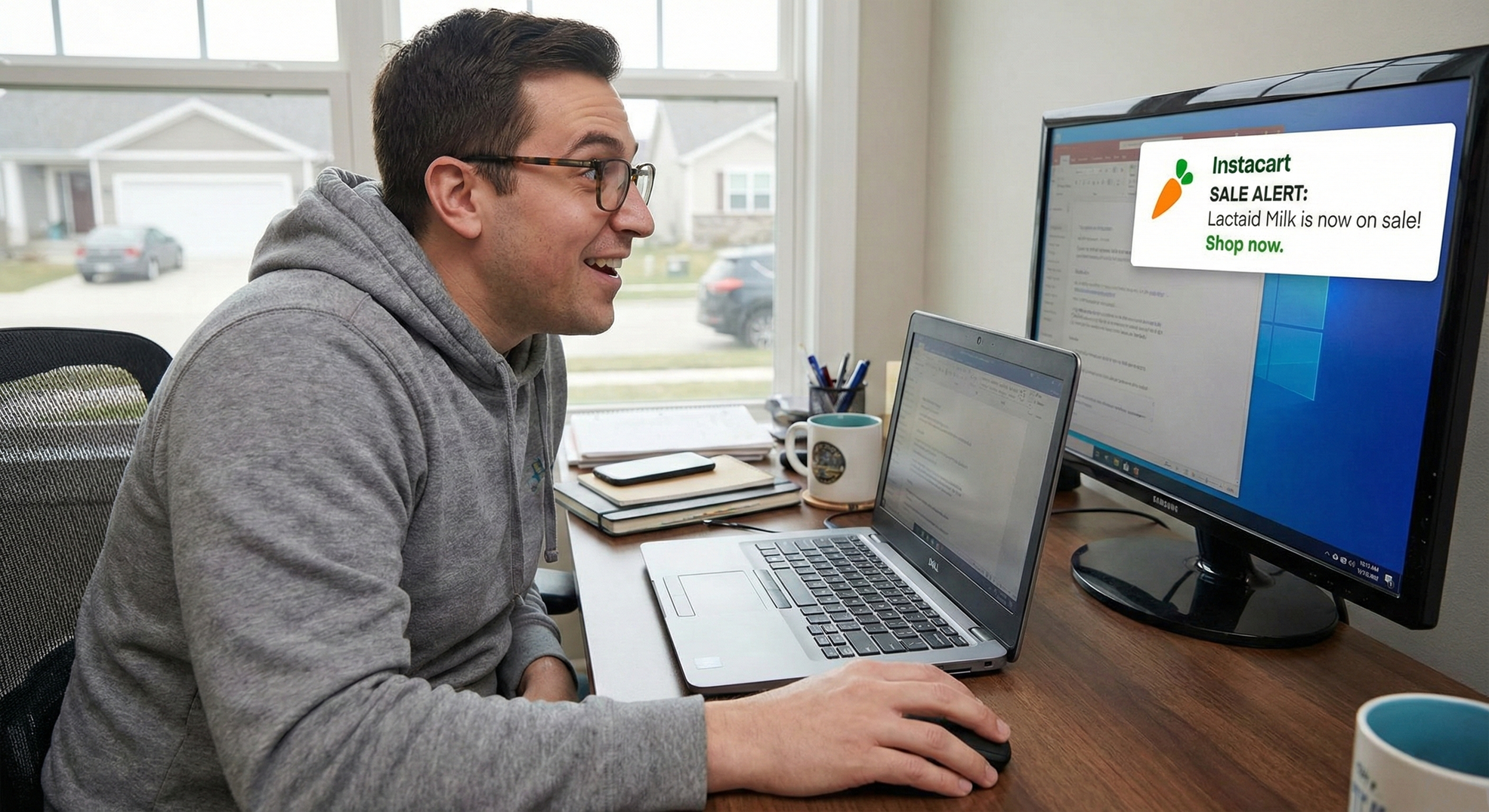
“Out of Lactaid milk?”
We see messages like this every day.
They feel helpful. Timely. Almost thoughtful.
Companies aren’t just responding to us anymore. They’re anticipating us and whether we realize
it or not, we’ve grown comfortable with that anticipation.
More than that, we now expect it.
You’re Not Being Watched. You’re Being Anticipated.
Think about the last time you opened your Starbucks app ready to order ahead… and it told you
that ordering ahead wasn’t available.
The frustration hits immediately.
Not because coffee disappeared, but because the experience you expected didn’t show up.
You’ve been trained to expect speed, recognition, and fewer steps. When that breaks, it feels
wrong.
Shopping Expectations Have Quietly Shifted
As an online shopper, you no longer expect to browse endlessly.
You expect to get to the right product faster.
You expect clarity without opening ten tabs.
You expect confidence before you buy.
When those expectations aren’t met, shoppers don’t complain. They leave.
This Is the New Baseline
AI didn’t change shoppers. It revealed what they wanted all along: less friction, fewer questions,
faster clarity.
The brands winning today aren’t the ones making the biggest AI announcements. They’re the
ones quietly meeting these expectations without making shoppers work for it.
Once you experience anticipation instead of friction, you don’t unlearn it.
From Prediction to Assistance
Being reminded you’re out of milk is helpful.
Being guided to the right product at the moment you hesitate is what actually moves shopping
forward.
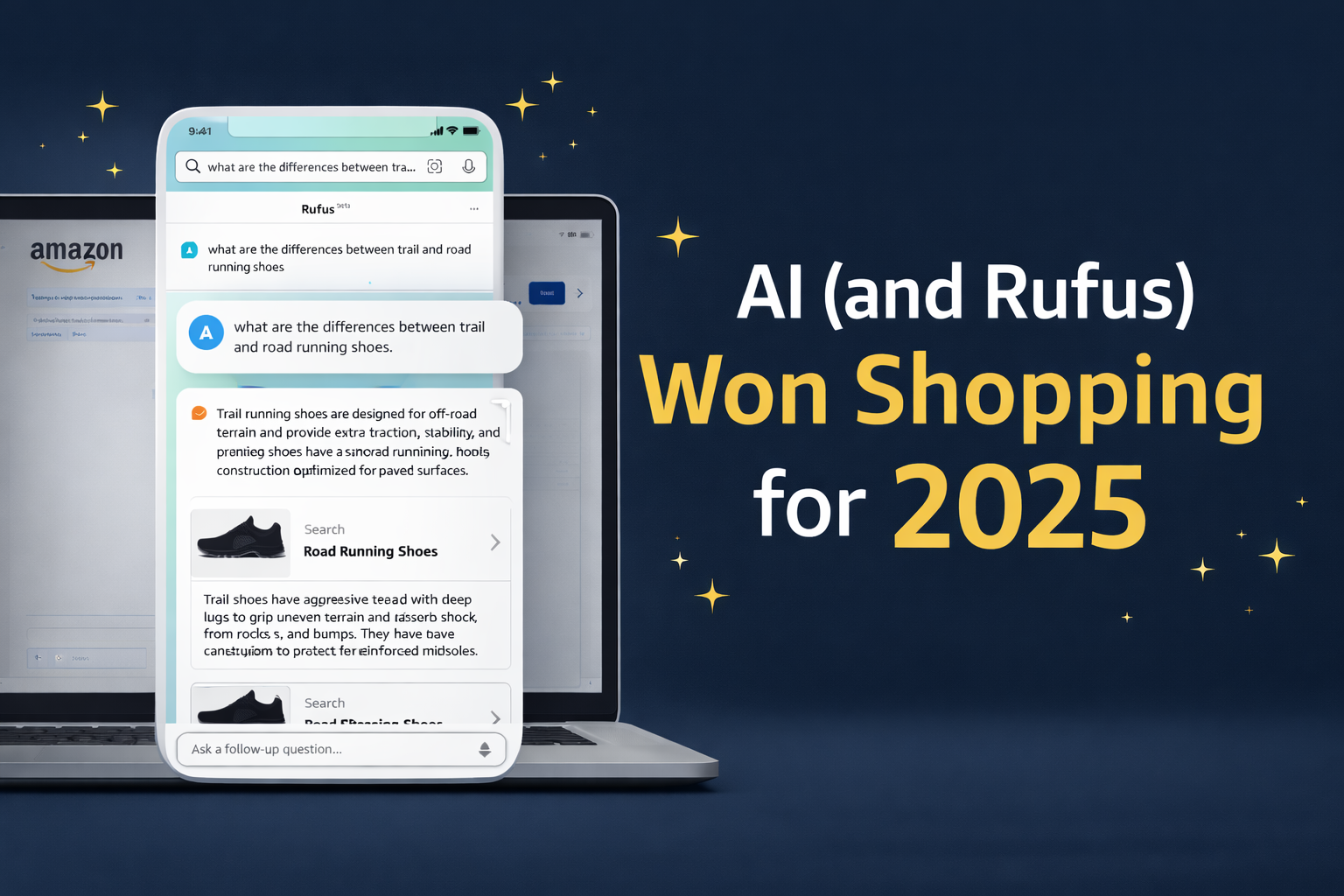
That’s where AI shopping assistants matter.
They don’t force decisions.
They remove uncertainty.
Shoppers have already been trained to expect more.
The only question left is whether your shopping experience delivers on it.
%20(1).png)