The question comes up in almost every AI discussion:
“Is it ethical to use AI with customers?”
It sounds thoughtful. Responsible. Cautious.
But it’s the wrong question.
The better one is this:
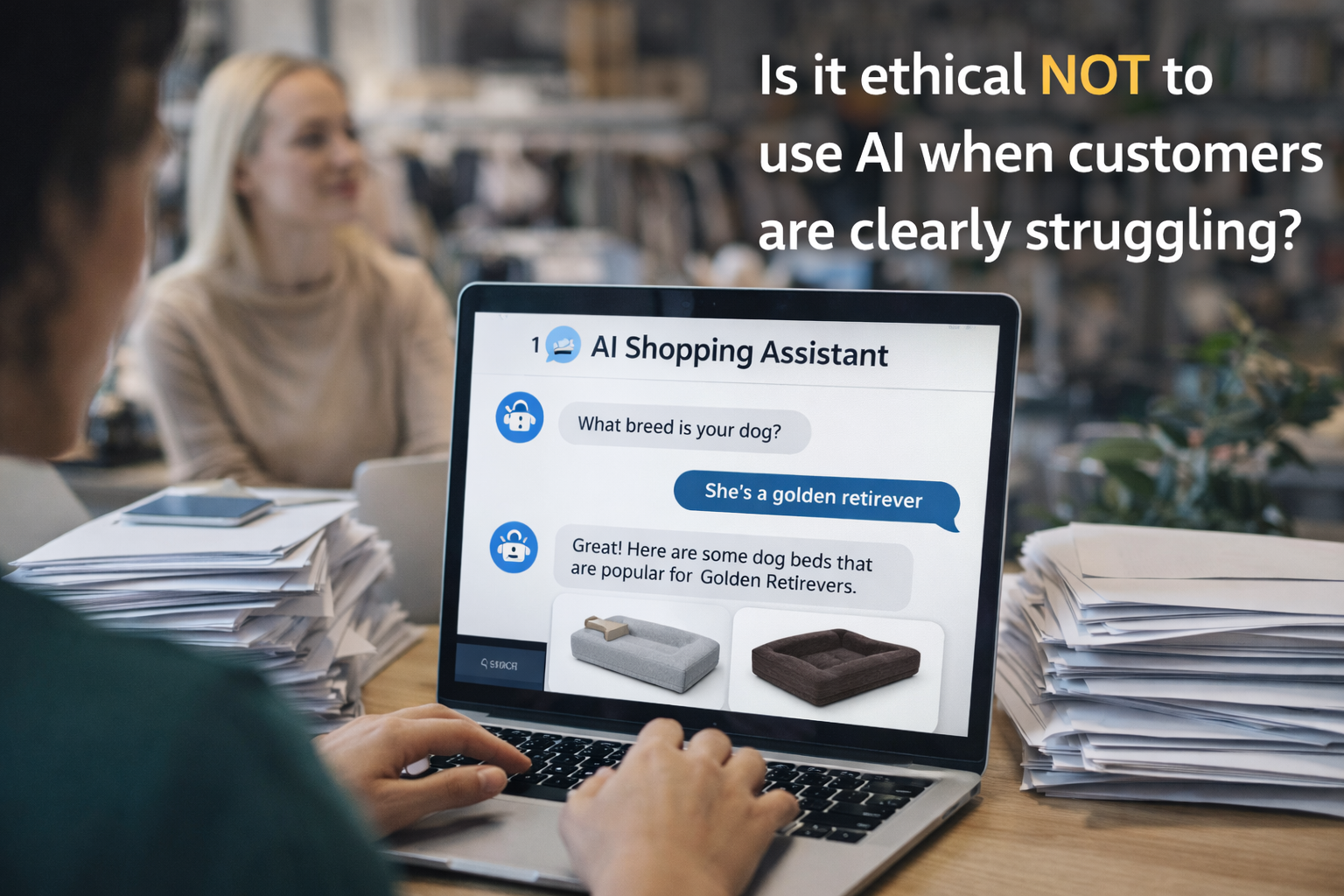
Is it ethical not to use AI when customers are clearly struggling?
Customers Are Already Asking for Help
Most shoppers don’t abandon a site because they’re uninterested. They leave because they’re
unsure.
Unsure which option fits.
Unsure what works together.
Unsure what they actually need.
For years, we’ve accepted that confusion as normal.
AI changes that.
It gives customers a way to ask questions privately, instantly, and without friction. It reduces
cognitive load. It removes guesswork. It helps people feel confident enough to decide.
There’s nothing unethical about that.

The Real Ethical Line Isn’t AI - It’s Deception
Ethics in AI doesn’t hinge on whether AI exists. It hinges on how it’s used.
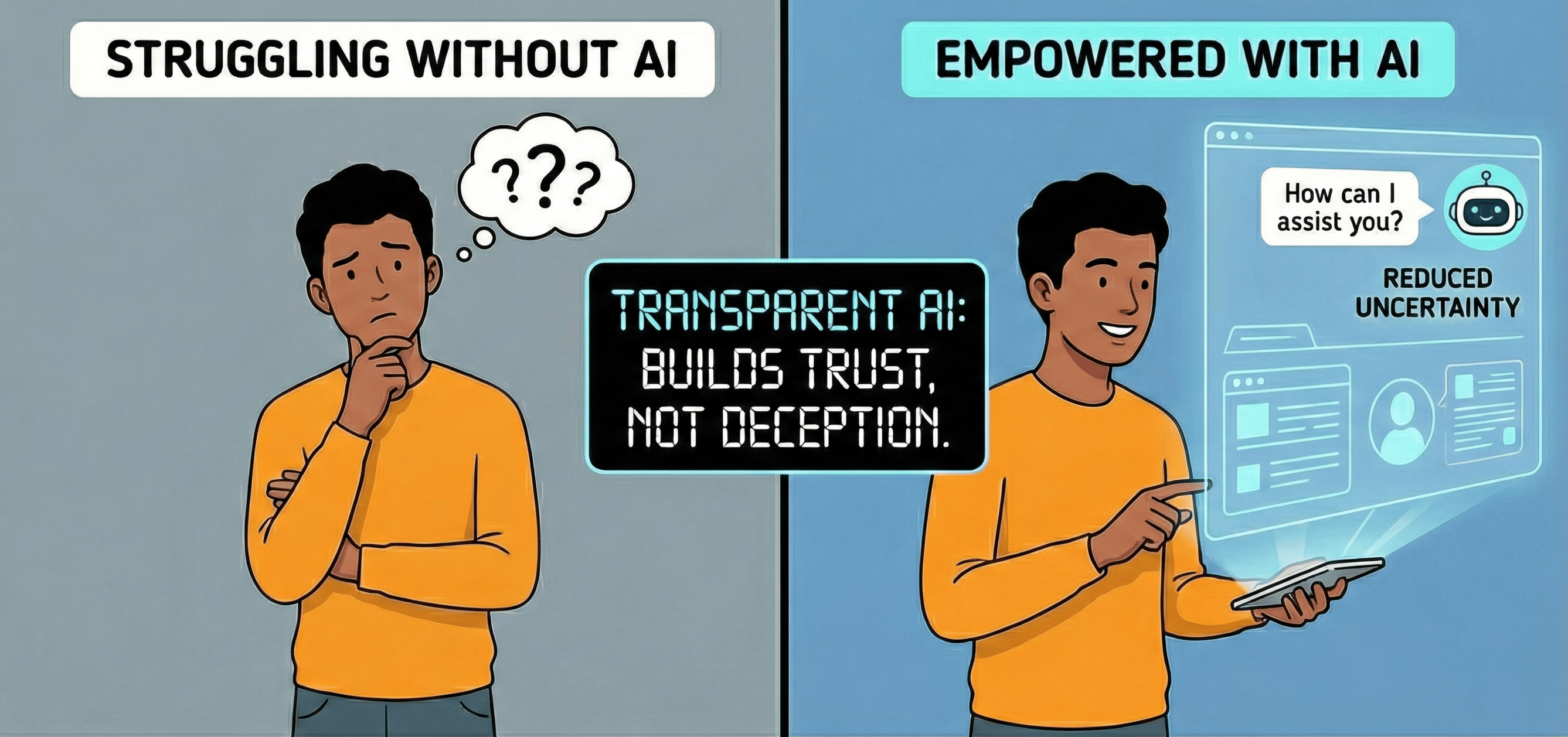
Transparent, assistive AI that helps customers make better decisions builds trust.
Deceptive AI that hides limitations or manipulates outcomes does not.
Most customers don’t care if an answer comes from AI or a human. They care whether it’s
helpful, accurate, and respectful of their time.
When AI improves clarity, it improves trust, not the other way around.
Friction Is the Bigger Risk
Forcing customers to dig through pages, filters, and PDFs when better tools exist is its own
ethical choice.
It prioritizes internal comfort over customer experience.
AI doesn’t replace human judgment.
It supports human decision-making at scale.
Used responsibly, it’s not a shortcut.
It’s a service.
%20(1).png)